A Complete Guide to Staying Strong, Healthy, and Active During Midlife
If you’ve ever found yourself wondering…
“Am I exercising the wrong way?”
you’re not alone.
Many women reach menopause feeling frustrated because the workouts that once helped them stay fit no longer seem to produce the same results.
You exercise.
The scale barely moves.
Your energy still feels low.
Your muscles seem weaker.
Recovery takes longer than it used to.
And despite working just as hard, your body simply doesn’t respond the way it did ten or twenty years ago.
It’s easy to conclude that exercise has stopped working.
Fortunately, that’s not what’s happening.
The reality is much more encouraging.
Your body hasn’t stopped responding to exercise.
Your body simply needs a different kind of exercise than it did before menopause.
Once you understand those changes, everything begins to make more sense.
Why Exercise Becomes More Important During Menopause
Many women think exercise is primarily about losing weight.
While maintaining a healthy weight is certainly one benefit, exercise becomes much more important during menopause for reasons that have nothing to do with the number on the scale.
Regular physical activity helps support:
- Muscle strength
- Bone health
- Heart health
- Brain function
- Better sleep
- Improved mood
- Healthy metabolism
- Balance and mobility
- Long-term independence
In other words…
Exercise isn’t simply helping you look healthier.
It’s helping you stay healthier.
That’s an important mindset shift.
Instead of exercising to become smaller…
Begin exercising to become stronger.
Why Your Old Workout May No Longer Be Enough
Many women notice that the routines they followed for years suddenly stop producing the same results.
This isn’t because you’re doing anything wrong.
It’s because your body is changing.
As estrogen levels gradually decline during menopause, several important changes occur:
- Muscle mass naturally decreases.
- Bone density begins declining.
- Recovery may take longer.
- Fat storage shifts toward the abdomen.
- Daily calorie needs gradually decrease.
That means the exercise program that worked at age 35 may not be the program your body needs at 55.
This doesn’t mean you have to work harder.
It means you need to work smarter.
Exercise Is No Longer About Burning Calories
One of the biggest mistakes many women make during menopause is believing every workout needs to burn as many calories as possible.
Calories matter.
But they’re only part of the picture.
The real goal of exercise during menopause is to build a body that remains:
- Strong
- Mobile
- Independent
- Energetic
- Healthy
For decades to come.
Think about it this way.
Would you rather burn 400 calories today…
Or build stronger muscles that help you stay active for the next twenty years?
The answer becomes obvious.
The Four Types of Exercise Every Woman Needs
One of the biggest myths surrounding menopause fitness is that there’s one perfect workout.
There isn’t.
Instead, research consistently shows that the healthiest exercise routines combine several different types of movement.
Think of exercise like building a house.
Each type of exercise plays a different role.
Together, they create a stronger foundation.
The four pillars are:
- Strength Training
- Cardiovascular Exercise
- Mobility & Flexibility
- Balance
When these four areas work together, they support nearly every aspect of healthy aging.
Let’s explore each one.
1. Strength Training: The Most Important Exercise During Menopause
If we could recommend only one type of exercise for women during menopause, it would be strength training.
Why?
Because menopause naturally accelerates the loss of muscle mass.
Muscle isn’t just important for lifting heavy objects.
It helps support:
- Your metabolism
- Bone health
- Balance
- Joint stability
- Everyday movement
- Independence as you age
Building and maintaining muscle becomes one of the most valuable investments you can make in your future health.
The encouraging news is that strength training doesn’t require becoming a bodybuilder.
It simply means challenging your muscles regularly.
That might include:
- Bodyweight exercises
- Resistance bands
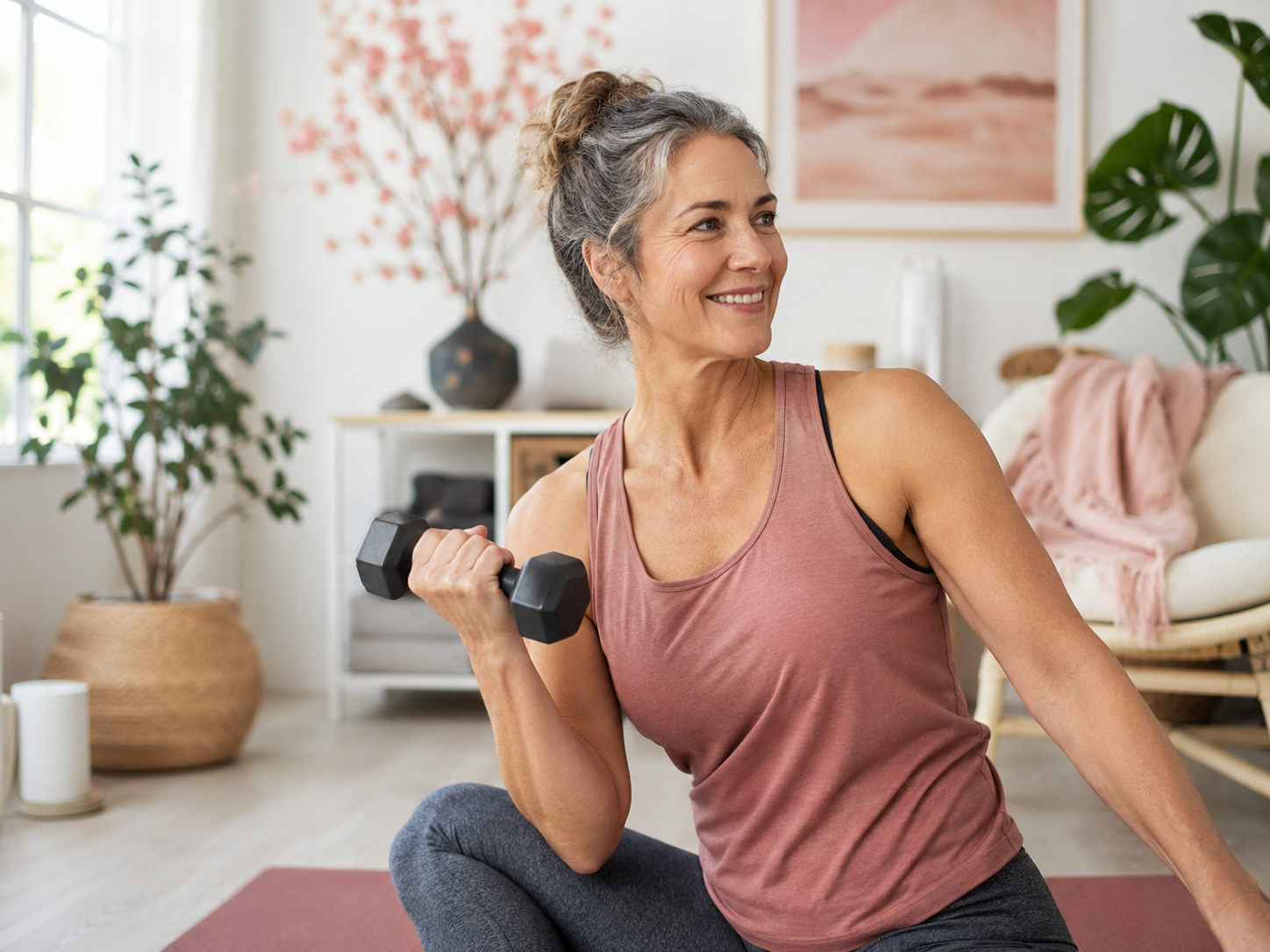
- Dumbbells
- Weight machines
The goal isn’t lifting the heaviest weights possible.
The goal is becoming a little stronger than you were last month.
2. Walking Is One of the Most Underrated Exercises You Can Do
Walking doesn’t always receive the attention it deserves.
Many women dismiss it because it feels “too easy.”
In reality, walking is one of the safest, most sustainable, and most effective forms of exercise available.
Regular walking supports:
- Heart health
- Mood
- Blood sugar regulation
- Better sleep
- Joint mobility
- Stress reduction
- Overall fitness
Best of all…
Almost everyone can do it.
You don’t need a gym membership.
Special equipment.
Or perfect fitness.
Just a comfortable pair of shoes and a willingness to begin.
A daily 20- to 30-minute walk may not seem dramatic.
But over months and years, those walks become one of the most powerful investments you can make in your health.
You Don’t Need to Become an Athlete
One of the biggest reasons women stop exercising is because they believe they have to do everything perfectly.
Long workouts.
Heavy weights.
High-intensity classes.
That’s simply not true.
The healthiest exercise routine is the one you can realistically maintain.
Small, consistent movement practiced week after week will always outperform the “perfect” workout you only complete once.
The goal isn’t becoming an athlete.
It’s building a body that allows you to enjoy your life.
Whether that’s hiking with your family…
Traveling…
Playing with grandchildren…
Or simply feeling strong enough to carry your groceries without discomfort.
That’s what exercise during menopause is really about.
Movement Is One of the Greatest Gifts You Can Give Your Future Self
Every walk.
Every strength workout.
Every stretch.
Every healthy choice.
You’re not simply exercising for today.
You’re investing in the woman you’ll become over the next twenty or thirty years.
And that’s one of the most empowering things about menopause.
It can become the moment you stop exercising to punish your body…
And start exercising because you appreciate everything your body is capable of doing.
That’s exactly where we’ll continue next.
Building Your Menopause Exercise Plan
By now, you might be wondering:
“This all sounds great—but what should my week actually look like?”
The good news is that you don’t need to spend hours in the gym every day to experience meaningful benefits.
In fact, one of the biggest misconceptions about menopause fitness is that more exercise always leads to better results.
That’s rarely true.
The goal isn’t to exercise as much as possible.
The goal is to exercise consistently enough to build strength, improve your health, and support your body for years to come.
Think of your weekly routine as balancing four important types of movement:
- Strength
- Cardiovascular exercise
- Mobility
- Balance
When combined, these create a complete fitness plan that supports nearly every aspect of healthy aging.
Build Your Week Around Strength Training
If strength training is the foundation of your menopause fitness plan, consistency matters far more than intensity.
For most women, two to three strength-training sessions each week provide an excellent starting point.
Each workout should focus on the major muscle groups.
This may include exercises such as:
Lower Body
- Squats
- Sit-to-stands from a chair
- Lunges
- Step-ups
- Glute bridges
Upper Body
- Dumbbell rows
- Chest press
- Shoulder press
- Wall push-ups
- Resistance band exercises
Core
- Bird dogs
- Dead bugs
- Side planks
- Farmer carries
You don’t need to perform dozens of different exercises.
Six to eight well-chosen movements performed consistently will produce excellent results.
Remember:
The objective isn’t to become exhausted.
It’s to gradually become stronger.
Make Walking Your Daily Habit
Walking is one of the simplest ways to improve your overall health.
Unlike many exercise programs, walking is:
- Free
- Low impact
- Beginner friendly
- Sustainable
- Effective
Aim to make walking a regular part of your day rather than something you only do when you “have time.”
Simple ideas include:
- Walking after dinner
- Parking farther away
- Taking walking meetings
- Walking while talking on the phone
- Exploring local parks or trails
Even twenty to thirty minutes most days of the week can provide meaningful health benefits.
The goal isn’t perfection.
It’s consistency.
Don’t Forget Mobility
Many women notice increasing stiffness during menopause.
Joints feel tighter.
Muscles feel less flexible.
Simple movements become more uncomfortable.
Mobility exercises help maintain comfortable movement throughout everyday life.
This may include:
- Gentle stretching
- Yoga
- Pilates
- Foam rolling
- Shoulder mobility exercises
- Hip mobility exercises
- Ankle mobility work
You don’t need an hour-long flexibility routine.
Even five to ten minutes each day can help improve how your body feels.
Balance Is a Skill Worth Practicing
Balance often doesn’t receive much attention until we begin losing it.
But maintaining balance becomes increasingly important with age because it helps reduce the risk of falls and supports independence.
Simple balance exercises include:
- Standing on one leg
- Heel-to-toe walking
- Tai Chi
- Yoga
- Step-ups
- Controlled single-leg movements
Improving balance today helps build confidence for the future.
Listen to Your Body—Not Social Media
One of the biggest mistakes women make is comparing themselves to fitness influencers online.
You don’t need to complete high-intensity workouts every day to be healthy.
In fact, the best exercise program is one that works for your body, not someone else’s.
Some days you may feel strong enough for a full workout.
Other days, a twenty-minute walk is exactly what your body needs.
Both count.
Consistency always beats perfection.
Recovery Is Part of the Plan
Many people think progress happens during exercise.
In reality, your body adapts and becomes stronger during recovery.
Recovery includes:
- Getting enough sleep
- Eating enough protein
- Staying hydrated
- Taking rest days when needed
- Managing stress
Rest isn’t a sign that you’re falling behind.
It’s part of becoming stronger.
A Sample Week of Movement
If you’re wondering how all of this fits together, here’s an example of a balanced week.
Monday
- 30-minute walk
- Full-body strength workout
Tuesday
- 20-minute walk
- Gentle stretching or yoga
Wednesday
- Full-body strength workout
Thursday
- 30-minute walk
- Mobility exercises
Friday
- Full-body strength workout
Saturday
- Hiking, swimming, cycling, dancing, or another activity you enjoy
Sunday
- Easy walk
- Stretching
- Recovery
Remember…
This is only an example.
Your schedule should fit your lifestyle, your fitness level, and your goals.
The best plan is the one you’ll actually continue following.
The Best Exercise Program Is One You’ll Still Be Doing Next Year
Many fitness programs promise dramatic results in thirty days.
But menopause isn’t about finding a workout you’ll do for one month.
It’s about building habits that support your body for the next thirty years.
You don’t have to be perfect.
You don’t have to exercise every day.
You don’t have to love every workout.
You simply need to keep showing up.
Because every workout is more than just exercise.
It’s another investment in your future strength.
Your future independence.
Your future confidence.
And your future health.
That’s exactly where we’ll finish this guide.
Frequently Asked Questions
What is the best exercise during menopause?
There isn’t one “perfect” exercise.
The healthiest approach combines:
- Strength training
- Walking or other cardiovascular exercise
- Mobility and flexibility work
- Balance exercises
Together, these forms of movement help support muscle, bone health, heart health, metabolism, and long-term independence.
Is walking enough during menopause?
Walking is one of the best forms of exercise you can do.
It improves cardiovascular health, supports healthy weight management, reduces stress, and can improve sleep quality.
However, for optimal health, walking should ideally be combined with strength training and mobility exercises to help preserve muscle and bone density.
How often should I exercise?
Most experts recommend aiming for at least 150 minutes of moderate physical activity each week, along with strength training at least two days per week.
Remember…
Doing something consistently is far more valuable than doing everything perfectly.
Will exercise help reduce menopause belly fat?
Exercise plays an important role in healthy weight management, especially when combined with nutritious eating and adequate sleep.
While no exercise can specifically target belly fat, regular movement helps reduce overall body fat while preserving muscle and improving metabolic health.
What if I haven’t exercised in years?
That’s perfectly okay.
The best exercise program is the one that starts where you are today.
You don’t need to become an athlete overnight.
Start with short walks.
Learn a few basic strength exercises.
Move a little more each week.
Small improvements made consistently often lead to the biggest long-term changes.
Key Takeaways
If there’s one message we hope you take away from this guide, it’s this:
Exercise during menopause isn’t about punishing your body.
It’s about protecting it.
Every walk.
Every strength workout.
Every stretch.
Every healthy decision.
You’re not simply exercising for today.
You’re building the strength, confidence, and health that will carry you through the next twenty or thirty years of your life.
Menopause changes your body.
But it doesn’t reduce what your body is capable of.
In many ways, this can become the chapter where you become stronger than you’ve ever been.
Not because you’re trying to look a certain way.
Because you’re choosing to invest in your future.
Your First Step Doesn’t Need to Be Perfect
If reading this article has motivated you, that’s wonderful.
But motivation alone rarely creates lasting change.
Action does.
And the easiest way to build lasting habits is to begin with small, manageable steps.
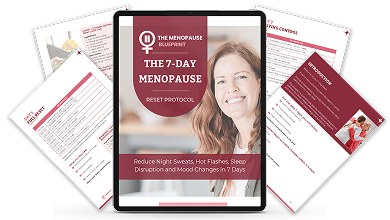
That’s exactly why we created the FREE 7-Day Menopause Reset.
It isn’t another workout challenge.
It isn’t another crash diet.
It’s a practical seven-day guide designed to help you begin building healthier habits without feeling overwhelmed.
Inside you’ll receive:
✔ A simple menopause-friendly nutrition plan
✔ Easy daily movement recommendations
✔ A beginner-friendly approach to building healthier habits
✔ Hydration and wellness checklists
✔ Daily symptom trackers to help you recognize progress
✔ Practical actions that help support better energy, improved sleep, healthier weight management, and greater confidence
The goal isn’t to completely transform your body in one week.
The goal is to help you stop wondering where to begin—and actually begin.
Because momentum starts with one small step.
Then another.
Then another.
When You’re Ready for the Complete Plan
The FREE 7-Day Menopause Reset gives you a simple place to start.
But menopause isn’t just about exercise.
It’s about understanding how your hormones, nutrition, sleep, metabolism, stress, and daily habits all work together.
That’s why we created The Menopause Roadmap.
Think of it as your complete guide to navigating menopause with confidence.
Inside you’ll discover:
- Why your body is changing during menopause
- The science behind common symptoms like weight gain, fatigue, brain fog, poor sleep, anxiety, and hot flashes
- Nutrition strategies that support your changing metabolism
- Exercise plans designed specifically for women in midlife
- Practical lifestyle habits that help you build long-term health—not just temporary results
Instead of searching dozens of websites for answers…
You’ll have one trusted, evidence-informed resource that connects everything together.
Stronger Than Yesterday
Imagine where you could be six months from now.
You wake up with more energy.
You’re sleeping better.
You feel stronger climbing the stairs.
Your clothes fit more comfortably.
You have the confidence to say “yes” to hikes, vacations, workouts, and time with your family because your body feels capable again.
That future isn’t built by one perfect workout.
It’s built by the small decisions you make every day.
A walk after dinner.
A strength workout twice a week.
A nutritious meal.
An earlier bedtime.
One healthy choice leading to another.
That’s the philosophy behind The Menopause Blueprint.
Not quick fixes.
Not unrealistic expectations.
Just practical, science-informed guidance that helps women build healthier lives with confidence.
Start today with the FREE 7-Day Menopause Reset.
Then, when you’re ready to take the next step, explore The Menopause Roadmap—your complete guide to understanding menopause, supporting your body, and creating a long-term plan for your health.
Because the strongest version of you isn’t behind you.
She may be the woman you’re becoming right now.